
U.S. Senator Ed Markey (D-MA)A new GAO report, requested by U.S. Senator Edward J. Markey (D-Mass., photo left) and U.S. Rep. Michael Burgess (R-Texas), finds that the shuttered U.S. Enrichment Corporation (USEC) facility received hundreds of millions…
Continue readingvia EX-SKF / June 8, 2014 / Confusion and misunderstanding ensue, following the reporting on the Ministry of the Environment’s plan (yet to be officially announced) to raise the radiation target level after decontamination in Fukushima from the current 0.23 microsievert/hour to 0.4-0.6 microsievert/hour. The Ministry of the Environment (supposedly) says the additional exposure from the radiation under the new target level will be still under 1 millisievert per year. The … Continue reading →
Continue readingvia NHK World / June 6, 2014 / The operator of the damaged Fukushima Daiichi nuclear power plant says more than 3 tons of radioactive water may have leaked from barriers surrounding storage tanks. Tokyo Electric Power Company made the announcement on Friday following the discovery of water leaking around 2 of its storage tanks on the hillside earlier this week. The tanks contain rainwater with radiation levels above government-set … Continue reading →
Continue readingvia Daily Kos / June 6, 2014 / The lecture shown below is a great resource that summarizes the most recent results from a crowd-funded program Our Radioactive Ocean dedicated to monitoring Fukushima sourced radionuclides off the US and Canadian Pacific coasts and measurements made by the international scientific community in the Pacific. Probable impacts of the Fukushima disaster on the health of the North Pacific ecosystem and human inhabitants … Continue reading →
Continue readingvia Japan Daily Press / June 4, 2014 / Masao Yoshida (pictured) – the former plant manager of the Fukushima nuclear power plant during the time when it was hit by the Great East Japan Earthquake and tsunami in March 2011 – died of cancer last year, but his recorded testimony revealed a flaw in the disaster management process that probably caused the chaos around the way Tokyo Electric Power … Continue reading →
Continue readingfrom Straight.com / May 29, 2014 / Japan’s Nuclear Regulation Authority (NRA) has given the go-ahead to the operator of the crippled Fukushima nuclear power plant to build a so-called ice wall around four reactors to prevent incoming groundwater from becoming severely contaminated. The NRA, Japan’s nuclear watchdog agency, had been considering the plan by Tokyo Electric Power Co. (TEPCO), which runs the Fukushima Daiichi plant, since last fall. TEPCO, … Continue reading →
Continue readingfrom Japan Times / May 31, 2014 / Singapore will lift a ban on food imports from Fukushima Prefecture imposed amid the nuclear meltdowns crisis, Premier Lee Hsien Loong said Saturday at a meeting with Prime Minister Shinzo Abe. In response, Abe expressed his gratitude and said, “It gives Fukushima great courage,” government officials said. Singapore stopped importing food products from Fukushima after the massive earthquake and tsunami of March … Continue reading →
Continue readingNEIS Board Member Linda Lewison in discussion with Environmental Law Policy Center’s Barry Matchett in Springfield, IL. Photo courtesy of NEIS.As related in a Nuclear Energy Information Service (NEIS) press release, an Illinois State House of Rep…
Continue readingvia Japan Times / May 28, 2014 / Water sampled from a well at the crippled Fukushima No. 1 nuclear plant has been found to contain levels of radioactive tritium that exceeds the limit for dumping it into the Pacific, operator Tokyo Electric Power Co. said. The discovery was the first report of over the limit tritium in groundwater at the wells since Tepco began discharging water into the ocean … Continue reading →
Continue readingvia Channel News Asia / May 28, 2014 / Japan’s government has announced it will replace two of its five members on the Nuclear Regulation Authority which determines if a nuclear plant is ready for a restart. Speculation is rising that the government is removing the seismic expert responsible for actually beefing up the requirements for nuclear plants. The Tokyo Electric Power Company (TEPCO) is eager to spread the message … Continue reading →
Continue readingThe U.S. Nuclear Regulatory Commission snuck out a major decision on the Friday before Memorial Day Weekend. Its generic study of whether or not to require the expedited transfer of “spent nuclear fuel” (irradiated nuclear fuel rods, highly radioac…
Continue readingvia JapanCrush / May 25, 2014 / Netizens have been alarmed by the news from national broadcaster, NHK, that part of the beautiful Hitachi Seaside Park have been closed off due to a peak in radiation levels. Ibaraki Prefecture, which is home to the park, neighbours Fukushima Prefecture, and therefore concerns over radiation levels have been ongoing since the 2011 nuclear disaster. From NHK.com Seaside Park Partially Closed As Radiation … Continue reading →
Continue readingvia Asahi Shimbun / May 24, 2014 / Successive Cabinets have refused to release details of firsthand accounts of the Fukushima nuclear disaster, despite an understanding by a government investigation committee that the information from 772 interviewees could be made public. The media and other third parties have been denied access to the testimonies about Japan’s worst-ever nuclear accident. The government is still showing reluctance even after The Asahi Shimbun … Continue reading →
Continue readingby Atsushi Komori / via Asahi Shimbun / May 25, 2014 / More than 90 percent of respondents during a public comment period on the Abe administration’s basic energy policy were opposed to nuclear power generation, according to an Asahi Shimbun estimate released on May 25. The Asahi Shimbun made the determination by tallying how many of 2,109 of about 19,000 comments sent to the government from December to January … Continue reading →
Continue readingEnvironmental coalition attorney Terry LodgeAn environmental coalition, represented by attorney Terry Lodge of Toledo (photo, left), has filed a defense of its contention alleging that FirstEnergy Nuclear Operating Company’s (FENOC) Davis-Besse atomic …
Continue reading
June 7 marks the first anniversary of Southern California Edison’s decision to permanently close the troubled San Onofre nuclear plant near San Clemente. Gene Stone of Residents Organized for a Safe Environment (ROSE) summed it up this way: “We are safer – but we are not yet safe.”
There are two crucial matters: the quality of storage technology on-site at San Onofre, and the prospects for long-term storage at a remote site.
The accuracy of Stone’s words was confirmed at a May 6 workshop on managing nuclear fuel waste. Tom Palmisano, senior nuclear officer for Edison, reported that cooling pools at San Onofre currently hold 2668 spent fuel assemblies including 1115 “high burn-up,” a fuel type that is hotter both thermally and radioactively than conventional fuel.
Spent fuel from Unit 1 is already in dry casks holding 24 assemblies each. Removal of Unit 2 and Unit 3 fuel from pools will require 100 more 32-unit casks. This will triple the footprint of the concrete storage structure, from today’s 200 x 400 feet to an ultimate 400 x 600 feet.
Experts are unanimous that fuel pool hazards are far greater than dry cask storage and the intent is to complete transfer in 5 to 7 years. At that point the focus shifts to long-term safety of casks.
A lively debate at the May 6 workshop pitted Marvin Resnikoff of Radioactive Waste Management Associates against Michael McMahon from cask manufacturer AREVA and Drew Barto, lead on spent fuel storage and transportation for the U.S. Nuclear Regulatory Commission (NRC).
Resnikoff reviewed the performance hazards and risks in cask safety for long-term on-site storage and off-site transport. McMahon and Barto countered with advances in design technology that they say provide a robust and secure storage system even for high burn-up fuel. Through this exchange of sharply differing views, the workshop added value by throwing the spotlight on key technical issues in specific ways that can be debated to a point of resolution. Nuclear safety advocates will be watching the outcome closely.
The other major contribution of the workshop was to confirm a striking degree of unanimity regarding the need to revitalize the process for locating and developing sites for long-term remote storage. Gains in on-site safety promised by technology advances did not diminish the consensus that spent fuel waste should be removed from San Onofre at the earlier possible opportunity.
In part this reflects the unusually exposed nature of the San Onofre site. But sentiment runs deeper. Per Peterson, a member of the NRC’s Blue Ribbon Commission, expressed a feeling little short of dismay at the national failure to identify and develop remote storage. Edison said it is committed to this outcome as the fully satisfactory solution. Members of the expert panel as well as the Citizens Engagement Panel (CEP) that hosted the event made it clear that indefinite on-site storage remains unacceptable.
Message to the NRC: San Onofre may be the test case where all parties are urging a better way than the grotesque and inappropriate land-use outcome of constructing a nuclear waste mausoleum at San Onofre or at any other closed nuclear plant.
Dr. David Victor of UC San Diego chairs the CEP, which organized the workshop. He summed up the discussion this way: “We have an obligation to make the long-term storage of fuel as safe as possible and practical. We need a strategy for federal action on consolidated storage and ultimate repositories. Toward that end, we should articulate what we as a community need—and carry through with the Governor and Congress to assure they give priority to what is most important.”
Enter Senator Barbara Boxer and colleagues Sanders and Markey. On May 16 they introduced Senate bills S. 2324, 2325 and 2326, which would:
• Require the NRC to cease its current practice of issuing exemptions to emergency response and security requirements for spent fuel at closed nuclear reactors, unless all fuel storage at the site is in dry casks.
• Ensure that host states and communities have a meaningful role in shaping decommissioning plans for retired nuclear plants.
• Require for the first time that the NRC to explicitly and publicly approve or reject each proposed decommissioning plan.
• Ensure operator compliance with the NRC requirement that spent nuclear fuel be removed from pools and placed into dry cask storage within 7 years after the decommissioning plan is submitted to the NRC.
• Provide funding to help reactor licensees implement plans for decommissioning nuclear plants.
• Expand the emergency planning zone for non-compliant reactor operators to 50 miles.
• Require the NRC to cease its current practice of issuing exemptions to emergency response and security requirements for spent fuel at closed nuclear reactors, unless all fuel storage at the site is in dry casks.
• Ensure that host states and communities have a meaningful role in shaping decommissioning plans for retired nuclear plants.
• Require for the first time that the NRC to explicitly and publicly approve or reject each proposed decommissioning plan.
• Ensure operator compliance with the NRC requirement that spent nuclear fuel be removed from pools and placed into dry cask storage within 7 years after the decommissioning plan is submitted to the NRC.
• Provide funding to help reactor licensees implement plans for decommissioning nuclear plants.
• Expand the emergency planning zone for non-compliant reactor operators to 50 miles.
The Boxer-Sanders-Markey bills are classic legislative oversight. They close safety-related loopholes and provide a more accountable and participatory process for affected area residents.
These sensible steps do not in themselves deal with on-site storage design technology or remote site development. But they are in the spirit of comprehensive nuclear waste management, which remains one of America’s largest environmental challenges.
These sensible steps do not in themselves deal with on-site storage design technology or remote site development. But they are in the spirit of comprehensive nuclear waste management, which remains one of America’s largest environmental challenges.
By Gleen Pascall
Sierra Club
Sierra Club
Aging Nuke Plants On Fault Lines In Tsunami Hazard Zones = Fukushimas… Any Questions?
PLEASE Turn off a light for Fukushima USA / San Onofre
PLEASE Turn off a light for Fukushima USA / San Onofre
Arnie GundersenAs posted on the Fairewinds Energy Education website:
CNN called Arnie Gundersen to learn about the use of kitty litter at the DOE’s Waste Isolation Pilot Project facility in New Mexico, which is being blamed for radiation leaks….
By Justin McCurry / theguardian.com / May 21, 2014 / The operator of the wrecked Fukushima Daiichi nuclear power plant has started pumping groundwater into the Pacific ocean in an attempt to manage the large volume of contaminated water at the site. Tokyo Electric Power (Tepco) said it had released 560 tonnes of groundwater pumped from 12 wells located upstream from the damaged reactors. The water had been temporarily stored … Continue reading →
Continue readingfrom Channel News Asia / May 21, 2014 / A Japanese court ruled Wednesday against the restarting of two reactors at a nuclear power plant, acknowledging residents’ safety fears and dealing a blow to the government’s plan to revive nuclear power. It was the first court ruling in Japan against the restarting of reactors since a massive earthquake and tsunami sparked meltdowns at the Fukushima nuclear plant in March 2011. … Continue reading →
Continue reading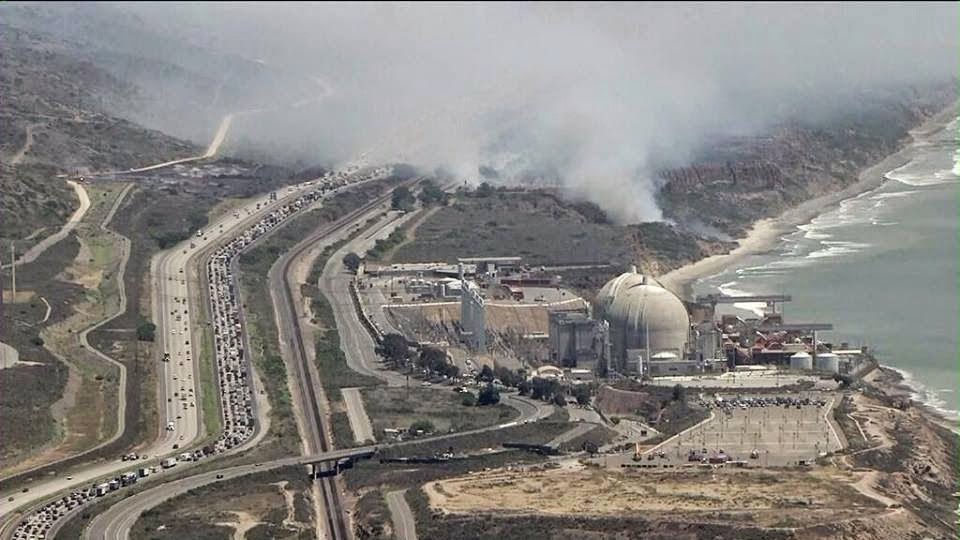 |
| Is Siren Testing During A Nuke Plant Evacuation A Good Idea? |
About a dozen non-essential employees have been evacuated from #SanOnofre as a precaution in response to a brush fire near #CampPendleton.
— SCE_SONGS (@SCE_SONGS) May 14, 2014
SONGS is conducting routine siren maintenance in #SanClemente on 5/14 and 5/15. Growl sound may be heard. No action needs to be taken.
— SCE_SONGS (@SCE_SONGS) May 14, 2014
The above tweets were posted by the official twitter account for SONGS as the San Onofre Nuke Dump was being evacuated during our recent wildfires here in San Clemente. In my discussions with other nearby San Clemente Residents, who are obviously not essential to running this now defunct nuclear waste generating station, we all agreed on one thing,
Who in their right mind would run a siren test during an actual emergency?
One is reminded of the childhood story and the lessons learned from “A Boy Who Cried Wolf” Have the people who run these tests never heard of this story? In a nutshell a boy The Boy Who Cried Wolf is one of Aesop’s Fables, derived the English idiom “to cry wolf”, meaning to give a false alarm. The fable concerns a shepherd boy who repeatedly tricks nearby villagers into thinking a wolf is attacking his flock. So when the time comes that the boy really was being eaten by a wolf, no one paid any attention.
Please Join Us Thursday Night To Express Your Dismay At This Alarming Lack Of Common Sense.
Are you coming? The #SanOnofre Community Engagement Panel will be held on May 22. It’s open to the public: http://t.co/pBgc2Kl9tL
— SCE_SONGS (@SCE_SONGS) May 20, 2014
Related articles
 San Clemente will consider urging removal of San Onofre nuclear waste
 San Onofre Siren System To Undergo Annual Testing Wednesday
 Fires near San Onofre Nuclear Power Plant
 KPBS: Concern over reports of high radiation levels near California nuke plant – Results shared with many residents via internet – Homeland Security professor believes readings not correct
 Wildfire Triggers Nuclear Plant Evacuations Brush Fires Trigger Evacuations at Plant
Aging Nuke Plants On Fault Lines In Tsunami Hazard Zones = Fukushimas… Any Questions?
PLEASE Turn off a light for Fukushima USA / San Onofre
PLEASE Turn off a light for Fukushima USA / San Onofre
from EX-SKF / May 19, 2014 / The entire ALPS multi-nuclide removal system is down again, as Line C has just been stopped as the water sample from Line C is found with high calcium content. Line A was stopped three days ago, and Line B has been idle since March this year, when the water treated in Line B was found with high beta (in the order of 10 … Continue reading →
Continue readingfrom Japan Times / May 20, 2014 / The government on Tuesday refused to comment on a media report that Masao Yoshida, the now-deceased chief of the Fukushima No. 1 nuclear plant at the time of the meltdowns, was quoted as saying most of the plant’s workers evacuated in spite of his order to remain. The daily Asahi Shimbun, which claims to have obtained a copy of an interview with … Continue reading →
Continue readingBy AKIRA HATANO / Asashi Shimbun / May 17, 2014 / Plans to start construction in June of frozen underground soil walls at the crippled Fukushima No.1 nuclear power plant are now askew after concerns were raised by the nation’s nuclear watchdog body. The Nuclear Regulation Authority said plant operator Tokyo Electric Power Co. has yet to submit documents demonstrating the safety and efficacy of the project, which is unprecedented … Continue reading →
Continue reading |
| Don’t Experiment With Nuke Waste Storage In Southern California |
Southern California Edison plans to upgrade to NUHOMS® 32PTH2 dry cask system to store their highly radioactive nuclear waste. This means storing 32 nuclear fuel assemblies in a space original designed for 24 fuel assemblies.. The higher number of fuel assemblies brings higher risk of radiation releases, especially for the hotter and more radioactive high burnup fuel. This is a brand new design that the NRC approved. However, the NRC is accepting public comments until May 15, 2014.
Submit comments at this Federal Register link. Refer to Docket ID NRC-2013-0271 in any correspondence to the NRC about this.
http://www.regulations.gov/#!documentDetail;D=NRC-2013-0271-0001
The NRC should not lower safety standards by approving this new canister.
Related articles
 High Burnup nuclear fuel , San Onofre, – Storage and Transportation issues
 Issues involving Storage and Transportation of High Burnup Nuclear Fuel
 National Action Alert “High Burnup Fuel” Is in Your Reactor Now.
 Safe and Secure Decommissioning Act of 2014
 Concern about oversight of San Onofre Nuclear Decommissioning

Aging Nuke Plants On Fault Lines In Tsunami Hazard Zones = Fukushimas… Any Questions?
PLEASE Turn off a light for Fukushima USA / San Onofre
PLEASE Turn off a light for Fukushima USA / San Onofre
via NHK World / May 14, 2014 / The government and the operator of a damaged Fukushima nuclear plant are expected to start next week releasing into the sea ground water pumped up at the plant. Officials of the government and Tokyo Electric Power Company say 2 surveys of groundwater show radiation levels of the water are below TEPCO’s safety target, which is lower than the government-set standard, at the … Continue reading →
Continue reading |
| Is 50 Miles Enough? |
Washington, D.C. — Senator Barbara Boxer (D-CA), Chairman of the Senate Committee on Environment and Public Works (EPW), Senator Bernie Sanders (I-VT) and Senator Edward J. Markey (D-MA) introduced three bills today aimed at improving the safety and security of decommissioning reactors and the storage of spent nuclear fuel at nuclear plants across the nation.
When spent nuclear fuel is removed from the part of the reactor that generates electricity, it continues to produce significant quantities of heat and radiation for years. Spent nuclear fuel is too dangerous to be removed from the spent fuel pools for 5-7 years. Studies conducted by the National Academy of Sciences, Nuclear Regulatory Commission (NRC) and independent experts have shown that partial draining of the water from a spent fuel pool caused by an accident or terrorist attack could result in a spontaneous fire, the release of large quantities of radiation, and widespread contamination. However, NRC regulations allow spent fuel to remain stored in spent fuel pools until the reactor completes decommissioning, which can take as long as 60 years. Current NRC regulations also allow the NRC and the nuclear plant operator to adopt a decommissioning plan without considering the concerns of nearby states and communities. The three bills introduced today will solve all of these problems.
Senator Boxer said: “ In my home state of California, the San Onofre nuclear plant has closed permanently, and this legislation will help guarantee that this facility, and others like it, are safely decommissioned and are no longer a liability for local communities.”
Senator Sanders said: “Every state with a nuclear power plant has a strong interest in how that plant is decommissioned. This is about making sure that states and local communities can play a meaningful role in a decision that has enormous economic, environmental, and community impacts.”
Senator Markey said: “Experts agree that a spent fuel pool accident could have consequences that are every bit as bad as an accident at an operating reactor. In Massachusetts, Pilgrim nuclear plant’s spent fuel pool contains nearly four times more radioactive waste than it was originally designed to hold. Nuclear waste must be moved to safer storage now before the next nuclear disaster occurs.”
Safe and Secure Decommissioning Act of 2014 (Boxer, Sanders, Markey)
The Safe and Secure Decommissioning Act of 2014 would prohibit the Nuclear Regulatory Commission (NRC) from issuing exemptions from its emergency response or security requirements for spent fuel stored at nuclear reactors that have permanently shut down until all of the spent nuclear fuel stored at the site has been moved into dry casks, which are a more secure and safe option for storage. NRC has determined that earthquakes would be the most likely cause of a spent fuel pool failure that could result in a spontaneous fire, the release of large quantities of radiation, and widespread contamination, but has granted every request from emergency response requirements that it has ever received from a licensee of a decommissioning reactor.
Nuclear Plant Decommissioning Act of 2014 (Sanders, Boxer, Markey)
The Nuclear Plant Decommissioning Act of 2014 would ensure that states and local communities have a meaningful role in the crafting and preparation of decommissioning plans for retired nuclear plants located in those areas. The bill also requires NRC to publicly and transparently approve or reject every proposed decommissioning plan, which it currently is not required to do.
Dry Cask Storage Act of 2014 (Markey, Boxer, Sanders)
The Dry Cask Storage Act of 2014 would ensure that every nuclear reactor operator complies with an NRC-approved plan that would require the safe removal of spent nuclear fuel from the spent fuel pools and place that spent fuel into dry cask storage within 7 years of the time the plan is submitted to the NRC. The legislation also provides funding to help reactor licensees implement the plans and expands the emergency planning zone for non-compliant reactor operators to 50 miles.
For Immediate Release (Important please read) Contact: Mary Kerr or Kate Gilman: 202-224-8832
May 13, 2014
May 13, 2014
mary_kerr@epw.senate.gov or kate_gilman@epw.senate.go
Michael Briggs (Sanders): 202-224-5141
Giselle Barry (Markey): 202-224-2742
U.S. Senate Committee on
Environment and Public Works
Senators Boxer, Sanders and Markey Introduce Legislation to Increase Safety at Nuclear Plants
Three bills address safety of spent fuel storage and decommissioning plans
Related articles
 Lawmakers press for stronger safety regulations for spent nuclear fuel rods
 Senators to NRC: Do not exempt decommissioning nuclear reactors from emergency response and security Measures
- Concern about oversight of San Onofre Nuclear Decommissioning
 Dead nuclear reactors are still very dangerous: US Senators call to Nuclear Regulatory Commission
 The Insane Economics Of Nuclear Power

Aging Nuke Plants On Fault Lines In Tsunami Hazard Zones = Fukushimas… Any Questions?
PLEASE Turn off a light for Fukushima USA / San Onofre
PLEASE Turn off a light for Fukushima USA / San Onofre
U.S. Sen. Barbara Boxer (D-CA), Chairwoman of the Environment and Public Works CommitteeU.S. Senator Barbara Boxer (D-CA, photo at left), Chairman of the Senate Committee on Environment and Public Works (EPW), Senator Bernie Sanders (I-VT) and Senato…
Continue readingvia EX-SKF / May 10, 2014 / Just as the start of fuel assembly removal from Reactor 4′s Spent Fuel Pool was anticlimactic, so is the removal of debris from Reactor 3′s Spent Fuel Pool. No one reports it (not even the independent journalists these days), and TEPCO does not publicize. According to the progress report inside the updated Roadmap (4/24/2014; from page 222 to page 233), since December 17, … Continue reading →
Continue readingAt the urging of environmental allies in southeast Michigan, Beyond Nuclear in March 2012 prepared a backgrounder on reactor, radioactive waste, and other nuclear risks in the region. The backgrounder has been updated for use at a presentation by Beyon…
Continue readingfrom Vice News / May 12, 2014 / In 2012, more than 15,000 people living near the crippled Fukushima nuclear power plant filed a criminal complaint at the Fukushima prosecutors’ office. They alleged that Tokyo Electric Power Company (TEPCO) and the Japanese central government were criminally negligent for the March 2011 Fukushima meltdown and the way in which the resulting cleanup was handled. The Fukushima police, however, declined to investigate. … Continue reading →
Continue readingvia RT.com / May 10, 2014 / The amount of Cesium-137 leaked from the Fukushima nuclear power plant could be worse than expected, a Japanese research team has concluded. They believe 50 percent more of the radioactive material could have escaped into the atmosphere and seawater. The original estimate of 13,600 terabecquerels was made by Tokyo Electric Power Co. (TEPCO), the operator of the power station. However, a new report … Continue reading →
Continue readingvia EX-SKF / May 7, 2014 / As of May 7, 2014, 814 fuel assemblies (22 new (unused) assemblies, 792 used fuel assemblies) out of the total 1533 in the Reactor 4 Spent Fuel Pool have been successfully removed. Removal of the fuel assemblies in Reactor 4′s SFP started on November 18, 2013. At this pace, it will be completed sometime in November this year, as scheduled. From TEPCO’s English … Continue reading →
Continue readingLooking at the overlap of U.S. nuclear reactors (both power and research facilities) and earthquake zones is pretty alarming.In a press release entitled “NRC Prioritizes Detailed Earthquake Risk Analysis For Central and Eastern U.S. Reactors,” the U.S…
Continue readingNRC file photo of Entergy’s Palisades atomic reactor, as well as the Great Lake and surrounding countryside it puts at riskDespite the industry’s claim that nuclear power is “clean energy,” Entergy’s Palisades atomic reactor has just spilled “approxima…
Continue readingvia CBS L.A. / May 7 2014 / The West Coast shoreline shows no signs of ocean-borne radiation from Japan’s Fukushima nuclear power plant disaster, scientists said Wednesday. KNX 1070′s Tom Reopelle reports researchers from CSU Long Beach and other schools are sampling kelp along the California coastline to determine whether seawater arriving from Japan poses any public health threat. The Kelp Watch 2014 project – which is co-headed by … Continue reading →
Continue readingIsotopic Compositions of 236U and Pu Isotopes in “Black Substances” Collected from Roadsides in Fukushima Prefecture: Fallout from the Fukushima Dai-ichi Nuclear Power Plant Accident ACS ActiveView PDFHi-Res Print, Annotate, Reference QuickView PDF [1735 KB] PDF w/ Links[312 KB] Full Text HTML Abstract Figures Reference QuickView Add to ACS ChemWorx Aya Sakaguchi*†, Peter Steier‡, Yoshio Takahashi†, and Masayoshi Yamamoto§ † Graduate School of Science, Hiroshima University, 1-3-1 Kagamiyama, Higashihiroshima, Hiroshima … Continue reading →
Continue readingvia Wall Street Journal / May 6, 2014 / Three years after the meltdown at Fukushima, the future of nuclear energy in East Asia is coming into view. Voters everywhere remain jittery about safety, but Japan and South Korea continue to invest in new capacity. The exception is Taiwan, which may soon exacerbate its own economic and strategic vulnerabilities by abandoning domestic nuclear-power production. Large street protests and a hunger … Continue reading →
Continue readingIssues involving Storage and Transportation of High Burnup Nuclear Fuel
By
Marvin Resnikoff, Ph.D.
Marvin Resnikoff, Ph.D.
SCE Community Engagement Panel (CEP)
San Juan Capistrano Community Center
San Juan Capistrano Community Center
May 6, 2014
In the interests of full disclosure, I once worked for a public interest organization with the trademarked name, CEP, Council on Economic Priorities, and co-authored a book in 1983 on transportation issues, 3 years before Holtec, who supplies dry storage casks for the nuclear industry. The CEP book supported dry storage of nuclear fuel, but I never realized at the time the present situation, the amount of fuel and burnup that the industry would employ. In a way, part of the problem is my doing. As a member of the Sierra Club, we intervened against the only commercial reprocessing operation in the United States, Nuclear Fuel Services in West Valley, NY, and shut them down. The lack of reprocessing has led utilities to store more fuel in storage pools and in dry storage casks. The lack of a final repository is also partly my doing. I work for the State of Nevada as a consultant on nuclear transportation issues and have since 1986. My parents never gave me a middle name, but sometimes I think it’s “Trouble.”
So utilities are left with the problem of spent nuclear fuel and also faced with competition from natural gas. The economics has forced utilities to hold fuel in reactors longer, not 3 years, but 4 ½, which means less shutdown time. And the economics are also forcing the industry to put more fuel into each dry storage cask, moving from 24 PWR assemblies, to 32, which Transnuclear has requested for San Onofre, to 37 PWR assemblies, which Holtec has requested. I’m going to briefly discuss transportation and storage of nuclear fuel, and I’m going to focus on high burnup nuclear fuel (HBF). What and why is HBF? NRC has not fully investigated the technical issues and implications, which in my view, are major and should have required careful study and an EIS. This is work that should have been done before the NRC allowed utilities to go to high burnup, not after. By high burnup, I mean fuel greater than 45 GWD/MTU, but in clearer terms, allowing each assembly to remain in the reactor longer. The implications are the radioactive inventory in HBF is greater. NRC staff have focused on the heat in HBF, which is greater. But heat will decline over time. One implication is decommissioning will take longer. Fuel will sit in fuel pool for 20 years or more. San Onofre has high burnup fuel. The implication of a longer decay time is that the workers at the site will not be available for the decom process. Putting more fuel into the same space, moving from 24 fuel assemblies to 32, as Southern California Edison intends to do, will further the cooling off period. However, while heat is an important consideration, but perhaps of greater import is the impact on fuel cladding. It may surprise you to know that the NRC does not know how much HBF exists across the country. While the NRC has the power and the ability to identify how much HBF is at each reactor. The NRC has inspectors at each reactor. They simply have not made the effort. The Department of Energy (DOE) is conducting a survey which should be released in September. HBF has major implications for decommissioning, storage, transportation and disposal.
Storage Issues
Let’s step back a second. Nuclear fuel assembly – collection of fuel rods. (fuel assembly) Each rod, about 12 feet long is composed of a tube, cladding, with nuclear fuel stacked like poker chips inside. But the cladding is quite thin, not much thicker than heavy duty aluminum foil. During operation and after, the cladding will develop defects. Studies by Argonne show that the zirconium cladding of HBF will become less ductile, or more brittle. How brittle? The NRC has contracted with Oak Ridge to examine cladding of HBF. The Oak Ridge study should have been completed in March, but has not been released. I call on the NRC to release the Oak Ridge study, before it is manicured by public relations specialists. This is a study that should have been done before HBF was licensed, not after the fact. In response the NRC would say, we do have technical support. The NRC will cite a study at Turkey Point reactor. But this demonstration project examined a cask loaded with lower burnup fuel (approximately 30 GWd/MTU average). Following 15 years of storage, the cask internals and fuel did not show any significant degradation (Einziger et al., 2003). According to that report, the data from this study can be extrapolated to maintain a licensing safety finding that low burnup SNF can be safely stored in a dry storage mode for at least 80 years with an appropriate aging management program that considers the effects of aging on systems, structures, and components (SSCs). The limits in ISG-11, Rev. 3, a peak cladding temperature of 400 oC, are all based on data available prior to 2002. None of this is directly relevant to HBF.
The NRC will also cite the 1988 report, PNL-6258, “Assessment of the Use of Extended Burnup Fuel in Light Water Power Reactors,” but this report did not address the cladding problems of HBF.
Cooling during storage may result in hydride-induced embrittlement. According to a more recent Argonne report, “pre-storage drying-transfer operations and early stage storage subject cladding to higher temperatures and much higher pressure-induced tensile stresses than experienced in-reactor or during pool storage.” The Argonne report discussed the problems of embrittlement of cladding of HBF. Due to thinning of cladding and lack of ductility, the cladding is weakened. As a result the cladding may not be an effective barrier to release of radioactivity to the cask canister. A report by the Nuclear Waste Technical Review Board goes into the matter in great detail. Thinning of cladding is correlated with the outer oxide layer on the cladding. As seen in the figure below, at a burnup of 60 GWD/MTU, the outer oxide layer is 115 microns. Considering the initial cladding thickness is on average 600 microns, NWTRB calculates a metal loss on the order of 70 microns or 12% at 60 GWD/MTU. Together with a hydride layer inside the cladding, this represents substantial weakening of the cladding.
Moving closer to home, for this reason, we are of the opinion, Edison should consider the HBF fuel assemblies to be damaged fuel that should be individually canned; the canned assemblies would then be stored in a HUHOMS concrete containment (NUHOMS being inserted) or a Holtec vertical silo (Holtec silo) for an indefinite period.
Passive cooling works like a chimney. Once fuel is removed and put into storage, after 18 to 20 years, the NRC license can be converted to storage. Here is what remains of CT Yankee reactor (photo). Nuclear fuel in 40 Holtec casks, and reactor internals in 3 casks. San Onofre will have many more casks. But one additional feature distinguishes the San Onofre situation, the salt environment. Documents show that the stainless steel canister has pitting corrosion, after less than 20 years. This is a major concern if casks are going to remain on-site for an extended period, say 40 to 100 years. NRC’s NUREG/CR-7030 states that atmospheric corrosion of sea salt can lead to stress corrosion cracking within 32 and 128 weeks in austenitic [corrosion resistant] stainless steel canisters. How will this corrosion be prevented? Can the canisters be coated to prevent corrosion We do not believe the industry has the experience in transferring failed (damaged) fuel from one cask to another and no procedures for doing this. In fact, no spent fuel bundle, damaged or not, has ever been transferred from one dry cask to another. Since high burnup fuel is more likely to fail sooner in storage, this becomes an even bigger and more urgent problem.
This is not a theoretical problem. Three examples of stress corrosion cracking at San Onofre have already been seen. In the fall of 2009, three examples of chloride-induced SCC which extended through-wall were discovered at the San Onofre Nuclear Generating Station (SONGS) in the weld heat-affected zone (HAZ) of Type 304 stainless steel piping. The piping included 24-inch, Schedule 10 emergency core cooling system (ECCS) suction piping; 6-inch, Schedule 10 alternate boration gravity feed to charging line piping; and an ECCS mini flow return to refueling water storage tank. While the through-wall failures were attributed to chloride-induced SCC, surface pitting was also observed on the surface of the pipes, with a greater concentration in the weld HAZ. All three pipes were exposed to the outside ambient marine atmosphere. Through-wall cracks developed after an estimated 25 years of service….
These are my takeaways on the HBF and storage issue:
• Little technical support for NRC approval of high burnup fuel (HBF). Experiment taking place in the field.
• Total amount of HBF unknown. At a minimum, the NRC should survey utilities.
• HBF will postpone storage up to 20 years; 32 PWR canister extends cooldown period.
• Cladding defects are a major problem for HBF; HBF may not be retrievable. HBF should be canned.
• Because of corrosion, long-term storage may not be possible in a salt environment.
• Little technical support for NRC approval of high burnup fuel (HBF). Experiment taking place in the field.
• Total amount of HBF unknown. At a minimum, the NRC should survey utilities.
• HBF will postpone storage up to 20 years; 32 PWR canister extends cooldown period.
• Cladding defects are a major problem for HBF; HBF may not be retrievable. HBF should be canned.
• Because of corrosion, long-term storage may not be possible in a salt environment.
Transportation Issues
Brittleness is important when considering transportation and disposal. One utility, Maine Yankee, has taken the important step of canning the HBF, that is, individually enclosing each fuel assembly in a stainless steel container. Concern is vibrations when transported, and potential shattering of cladding in a transportation accident. Transportation casks must satisfy regulatory accidents. Casks must withstand 30 foot drop onto an unyielding surface. In a hypothetical transportation accident, cask must withstand an end drop (drop from Holtec rpt) where 140 ton casks are cushioned by impact limiters. But a more serious accident involves a side impact where impact limiters are not present. One example is a RR crossing where a cask could be struck by the sill of a locomotive. (picture from NV rpt). NRC has not carefully evaluated such an accident, including the impact limiters. NRC hypothetical accident requires the cask to withstand a 30 inch drop onto a punch.
Another type of accident involves fire. Several major train fires have occurred recently. 140 ton casks would be shipped by train, on the same routes used by oil tankers. Right now, nuclear fuel has nowhere to go, no final repository. But NRC has not done the statistical analysis to determine the statistical likelihood of a nuclear shipment caught in an oil tanker fire. A study of the likelihood of an accident involving an oil tanker fire and a nuclear shipment requires a sophisticated Monte Carlo analysis. In addition to the likelihood of a long duration fire involving a nuclear cask, the NRC must also analyze the consequences of a radioactive release In my opinion, the NRC has not properly taken into account a long duration fire, by not properly taking into account the conduction of fire heat into the cask interior. As seen, fuel sits within a sealed canister, welded shut. The transportation overpack is metal, but this is surrounded by a neutron absorber, generally boronated, hydrogenated plastic, with an outer metal envelope. (picture of cask crossection). Plastic does not effectively conduct heat, so additional metal pieces serve to transfer heat out of the cask, but also conduct heat into the cask in a fire. Oil fire may burn at 1850 oF or higher depending on the air supply. The hypothetical accident fire consists of an all engulfing fire at 1475 oF for 30 minutes, while an oil fire can burn for many hours. The most recent NRC report NUREG-2125 does not correctly take into account a long duration high temperature fire and should be redone.
Here are my takeways on the transportation issue:
• Realistic low probability, high consequence accidents should be examined.
• Side impact rail accidents may shatter HBF cladding.
• Long duration, high temperature fires may involve oil tankers that travel the same tracks. NRC has not properly quantified the statistical likelihood.
• Side impact rail accidents may shatter HBF cladding.
• Long duration, high temperature fires may involve oil tankers that travel the same tracks. NRC has not properly quantified the statistical likelihood.

Aging Nuke Plants On Fault Lines In Tsunami Hazard Zones = Fukushimas… Any Questions?
PLEASE Turn off a light for Fukushima USA / San Onofre
PLEASE Turn off a light for Fukushima USA / San Onofre
via Enformable.com / May 5, 2014 /Japanese Prime Minister Shinzo Abe and French President Francois Hollande met during a summit meeting at the Elysee Palace in Paris on Monday and agreed that the two countries will work to promote the research and development of fast breeder reactors. According to Japanese sources with knowledge of the agreement, Japan will provide technical assistance on France’s fast breeder reactor development projects. France has … Continue reading →
Continue readingA novel by Darragh McKeon, All That Is Solid Melts Into Air, has been published in the U.S. by Harper Collins and will be featured at a Beyond Nuclear special book event on Monday, May 19th at Busboys and Poets in Washington, DC.
A theater…
John LaForge of Nukewatch in Luck, WIJohn LaForge of Nukewatch Wisconsin has published an article at CounterPunch entitled “A Rhetorical Outburst: Canadian ‘Experts’ Comfy with Radioactive Pollution of Great Lakes.”
It is John’s response t…
via NewsOnJapan.com / May 2, 2014 / Fukushima prefectural police said Thursday that two senior officers have committed suicide this week. In the first case, which occurred on April 28, Yoshikuni Tasaki, 51, an inspector, hanged himself inside an office at a police building. Fuji TV quoted police as saying that Tasaki left a note in which he said he was exhausted from work. In the second case, which occurred … Continue reading →
Continue readingAs reported by KNDO, a whistleblower at the Hanford Nuclear Reservation has revealed that a pipe explosion occurred at the Plutonium Finishing Plant (PFP) two weeks ago, but was not publicly reported. The PFP played a role in fabricating the weapons-gr…
Continue readingU.S. Senator Barbara Boxer, Chairwoman, Environment and Public Works CommitteeFive Democratic U.S. Senators have written U.S. Nuclear Regulatory Commission (NRC) Chairwoman Allison Macfarlane, uring that NRC’s rubberstamp of exemptions from emergency p…
Continue readingThe Brothers Reuther. From left to right, Roy, Walter, Victor. Walter P. Reuther Library, Wayne State University, Detroit, MI.It is fitting, on International Workers’ Day, to pay tribute to Walter Reuther.
Reuther’s biographer, Nelson Lichtenstein (The…
via Goddard’s Journal / April 24, 2014 / Critique of two studies claiming 14,000 deaths and disease in North American caused by the Fukushima nuclear disaster in Japan. Letter by Yuri Hiranuma to the journal that published the congenital-hypothyroidism study : http://fukushimavoice-eng2.blogspot.jp/2014/04/a-letter-to-editor-regarding.html The journal rejected the letter w/o explanation. The journal publisher is on Beall’s “List of Predatory Publishers 2014″ : http://scholarlyoa.com/2014/01/02/list-of-predatory-publishers-2014/ The two studies critiqued Mangano J, Sherman J, Busby … Continue reading →
Continue readingvia business-standard.com / April 30, 2014 / The operator of Japan’s crippled Fukushima nuclear plant said today it booked a USD 4.3 billion annual net profit owing to an electricity rate hike and a massive government bailout following the 2011 disaster. Tokyo Electric Power (TEPCO) was teetering on the brink as cleanup and compensation costs stoked huge losses and threatened to collapse the sprawling utility until Tokyo stepped with a … Continue reading →
Continue readingThe UN IAEA’s official radioactivity hazard warning signNIRS has published a press release entitled “NRC Fails to Document Claim Made in Denial of NIRS’ Emergency Planning Petition that ‘Majority’ of Nuclear Emergency Drills Include Natural Disaster…
Continue readingDavid Kraft, Director, Nuclear Energy Information Service (NEIS) of ILThe Chicago Tribune reports that Exelon CEO Chris Crane denies the largest nuclear utility in the U.S. is seeking a bailout from the State of Illinois in order to stabilize its flagg…
Continue readingStatement of Tyson Slocum, Director, Public Citizen’s Energy ProgramApril 30, 2014Contact: Tyson Slocum (202) 454-5191Karilyn Gower (202) 588-7779″Today’s announcement of a debt-laden acquisition of D.C.-based Potomac Electric Power Co (PEP…
Continue reading